Nutrition and Exercise
Diet and Nutrition
Many people living with lung fibrosis find that their body weight and other nutritional indicators can be impacted by the disease. There can be many reasons for this. It might be that breathlessness makes eating more difficult. A lack of energy can make preparing meals harder. You might have reduced appetite. As a result, losing weight and associated muscle mass is common in lung fibrosis.
It’s important to eat a well-balanced diet in the management of your disease. Eating the right foods can help maintain muscle strength and support lung function. It can also help with nausea, breathlessness and acid reflux you might be experiencing. It’s important to maintain a healthy weight (not being underweight or overweight) and body mass index as well. For example, losing weight unintentionally can lead to increased flare ups, increase the risk of hospitalisation, and lead to faster deterioration in lung function.
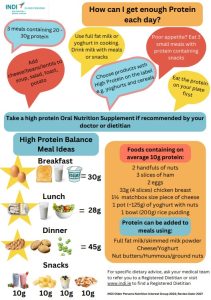
Maintaining muscle mass and strength is very important. It offers a protective effect and is associated with reductions in breathlessness and improved quality of life. The best way to do that is through diet and exercise. For example, protein is the foundation of building muscle so it’s important to eat foods high in protein like meats, chicken, fish, nuts, tofu, and beans with every meal (about 20-30 grams of protein with each meal is recommended).
(source: https://indi.ie/images/fact_sheets/OPNIG%20Finalised%202024%20Sarcopenia%20%20Protein.pdf)
Medications can cause side effects. Nausea, diarrhoea or a change in appetite can occur and this can make it harder to enjoy your food. If you experience side effects from your medication, it’s important to speak to your medical team. Here are a few strategies to try as well provided by Ciara Walsh, Respiratory Nutritionist.
|
Symptom |
Diet Strategy |
| Short of Breath |
|
| Fatigue |
|
| Dry Mouth |
|
| Taste Changes |
|
For more information on nutrition, see Ciara’s Let’s Talk session: https://www.youtube.com/watch?v=v6m0cv_X03E&t=13s
Ciara also recommends eating small meals throughout the day rather than fewer, larger meals.
If you have nausea, you might try taking medication with food (as long as this is recommended by your doctor), avoiding strong-smelling foods if they trigger nausea, and drinking peppermint tea or foods and drinks with ginger.
If you have diarrhoea you might want to try reducing high fat or spicy foods. Again, try taking medication with food (as long as this is recommended by your doctor). You might also want to limit your intake of sugar-free mints and gums. You can also reduce caffeine but do make sure you’re drinking enough water and other fluids so you don’t get dehydrated.
Keeping a food symptom diary will help you track foods and symptoms so that you can avoid them in future. Here is a link to the Irish Heart Foundation’s Food Diary template: https://irishheart.ie/wp-content/uploads/2018/01/IHF-Food-Diary-2018-A5-V3.pdf
Action for Pulmonary Fibrosis in the UK also has some helpful information on nutrition: https://actionpf.org/information-and-support/eating-well-with-pulmonary-fibrosis
Exercise
Exercise is very important for building strength, increasing endurance, and managing breathlessness. If your medical team has cleared you for exercise, consider this weekly schedule:
- Aerobic Exercise: Aim for 20 to 30 minutes of continuous or interval-based movement (e.g., gentle walking) 3 to 5 days per week.
- Strength Training: Perform 2 to 3 days of light resistance training. Focus on high repetitions with low weights.
- Flexibility: Gentle stretches and warm-ups help prepare your muscles and prevent stiffness.
For more information on exercise and breathlessness, see our practical help page:
Also, see our Strength and Conditioning video: https://www.youtube.com/watch?v=K-cLPbyMYYE
ILFA offers exercise classes every week! Contact us to register.